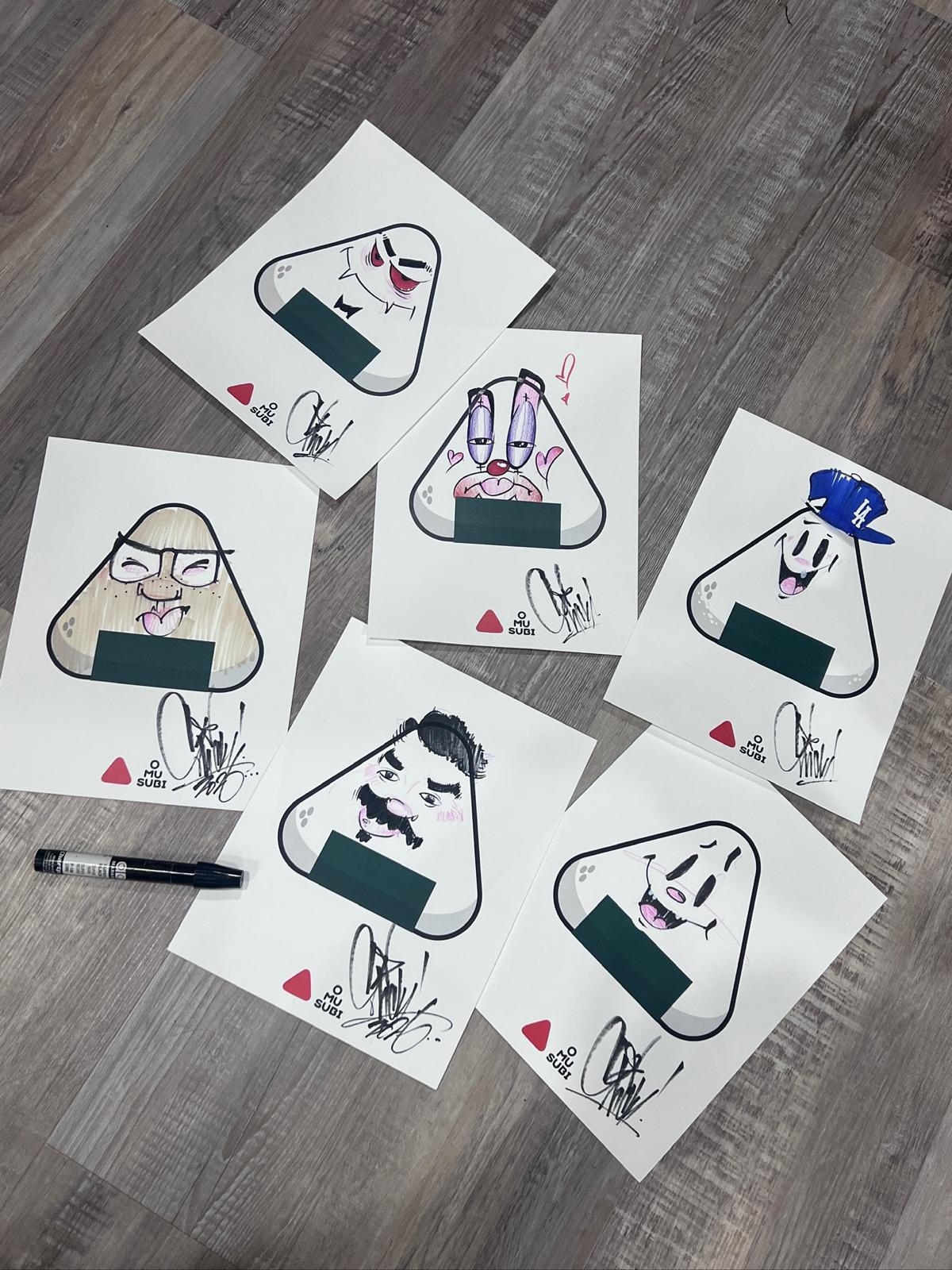
A two‑day artist activation for Omusubi's first US store opening — designed around their gallery‑adjacent space, the brand mark they protect, and the artist they invited.
Omusubi's first US store is 1,100 square feet — beautiful for service, too small for the kind of weekend the brand deserves. The adjacent gallery space turns the constraint into a stage: somewhere guests linger, make something, and leave wearing the brand.
1,100 sq ft
2 days
1 artist
The gallery space next door becomes the experience: brand storytelling on one wall, Slick's character world on another, a customize-your-merch station, a kid-friendly draw-along, all wrapped in a matcha cocktail bar and DJ atmosphere produced by the event team.
Omusubi's identity is the work of Kashiwa Sato — the same studio behind UNIQLO. We're inheriting a brand system that was built to be guarded. This is how Curative interprets that responsibility for the activation.
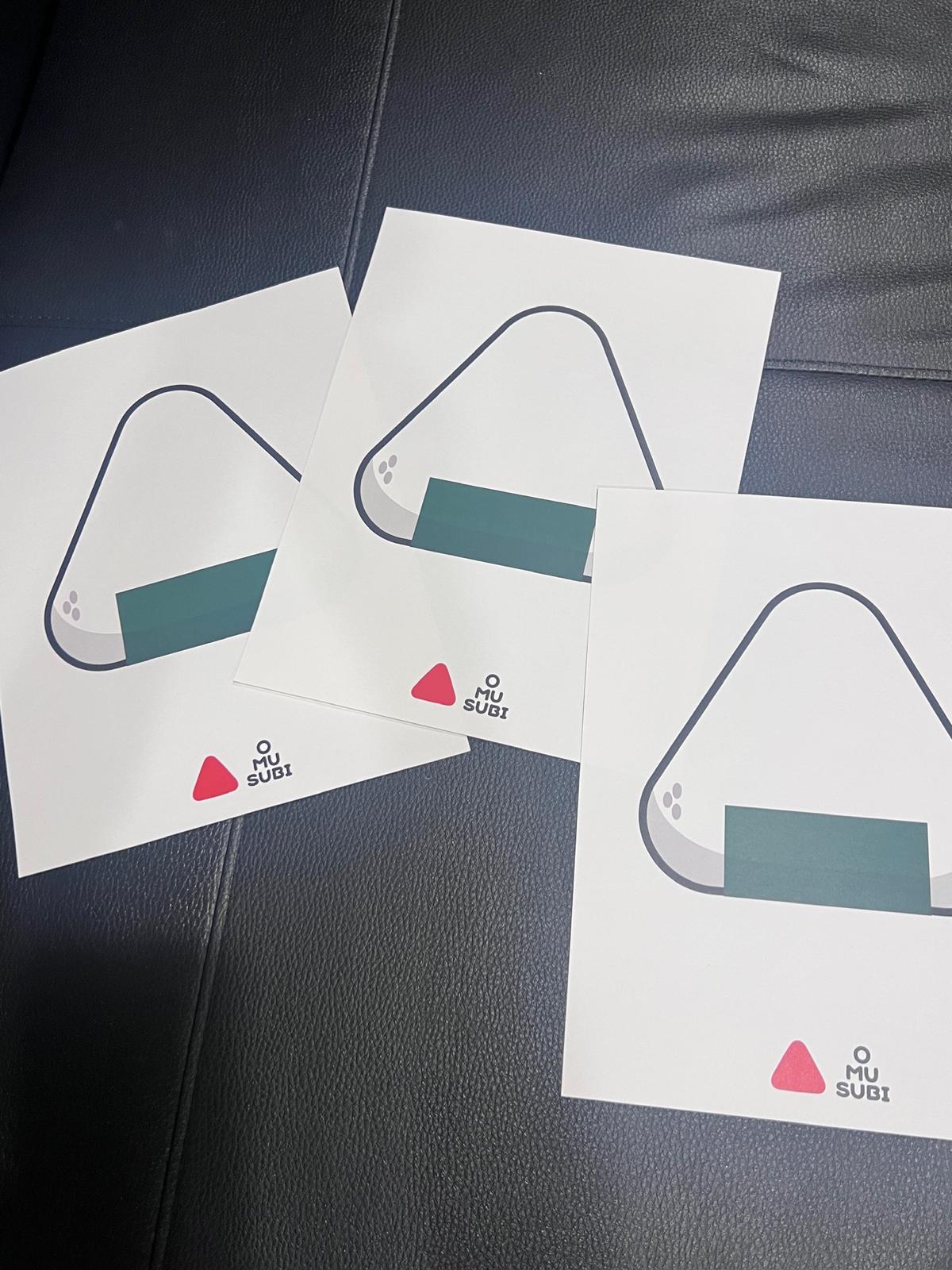
Every printed template, every drawn character, every sticker begins from the official Omusubi silhouette — clean triangle, nori band, wordmark intact at the bottom.
His characters fill the inside of the mark with personality — but they never overprint, recolor, or distort the canonical brand elements.
Every creative decision passes through us before it hits the brand team. We translate Slick's instincts into briefs the brand can approve — and we translate brand notes into edits Slick can run with.
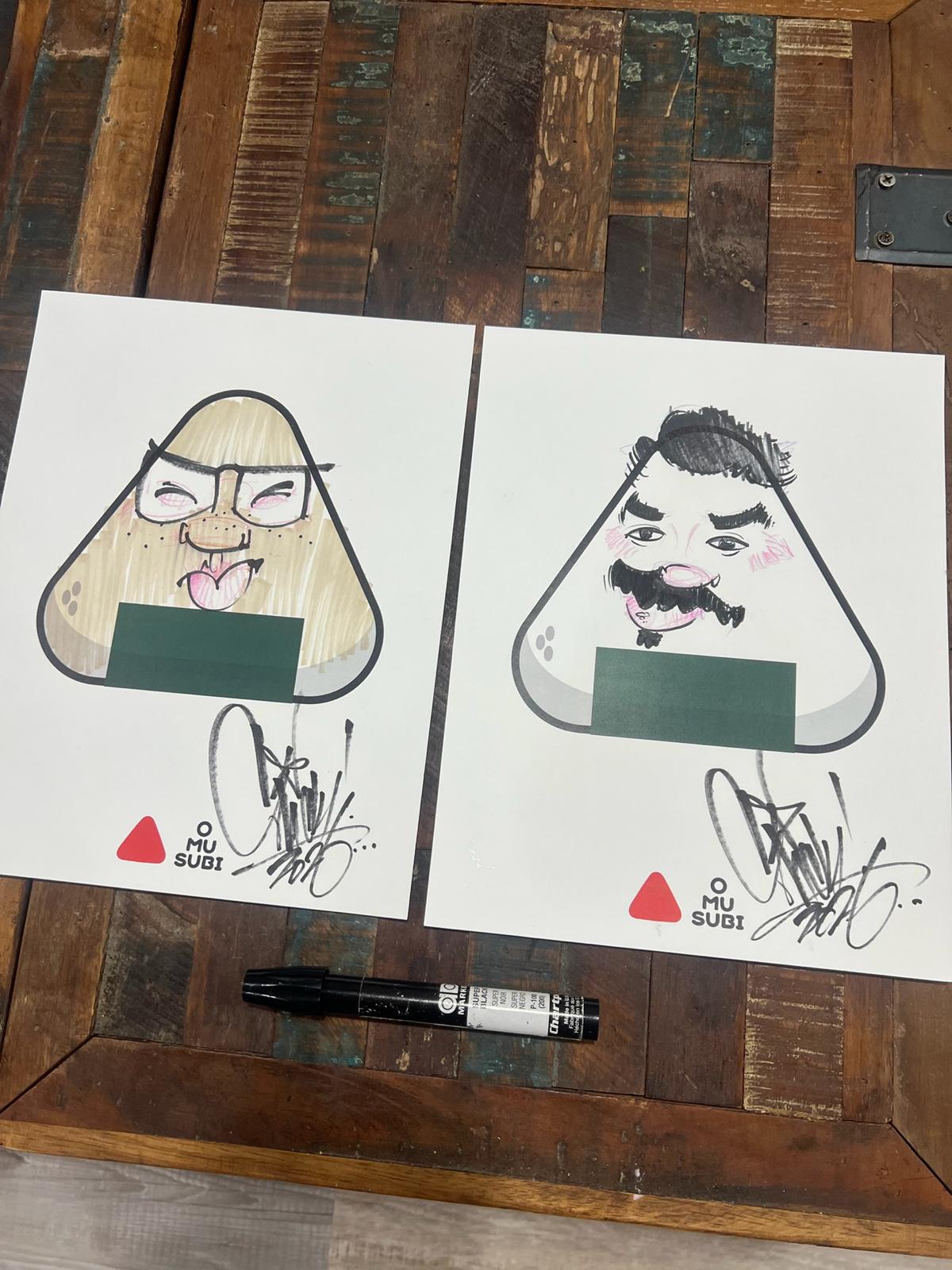
Every face starts from the Omusubi mark — never on top of it.
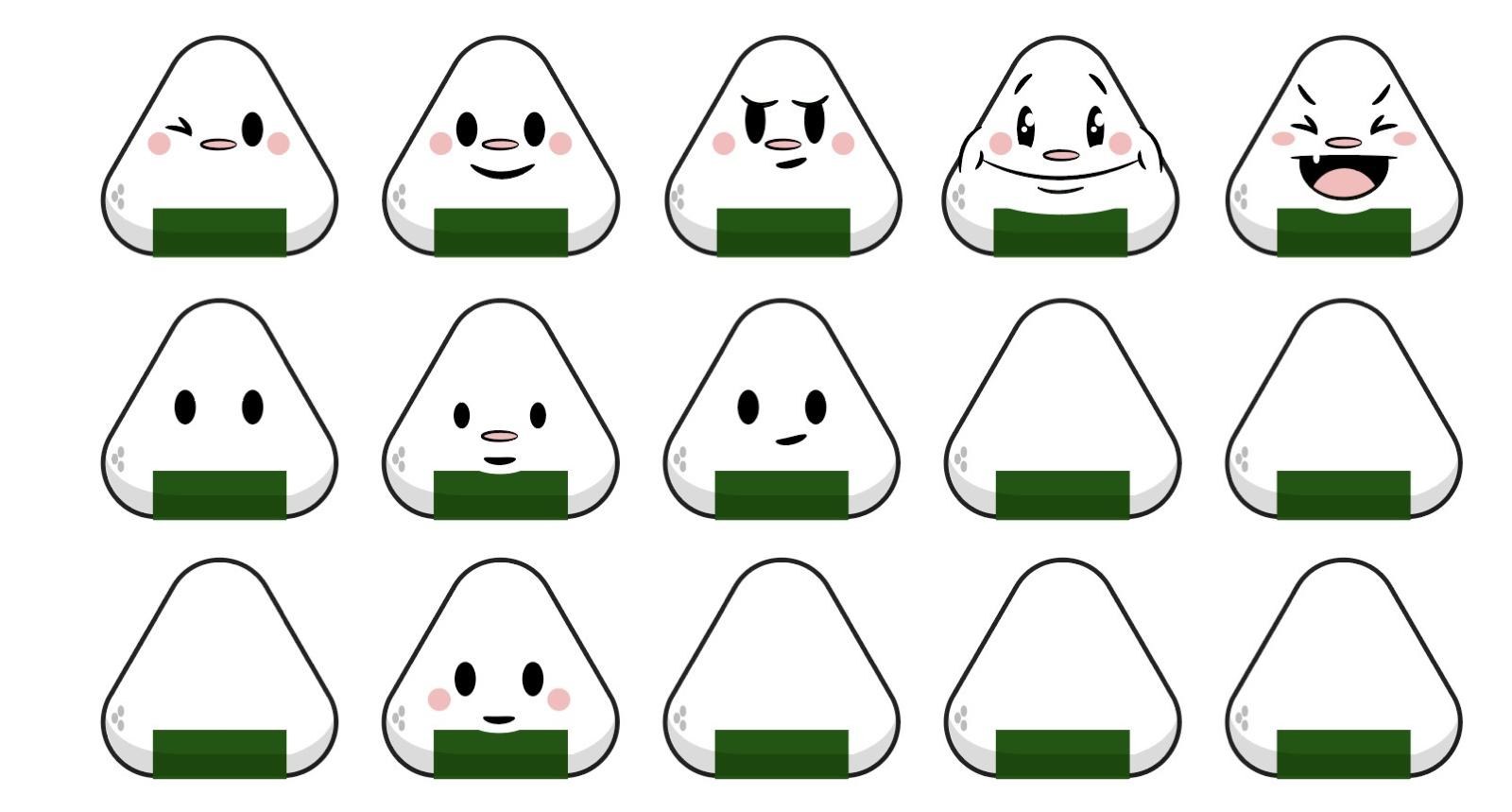
The thread that ties every activation together is the character itself — a small, repeatable ensemble of Omusubi-mark portraits that becomes the visual world guests step into.
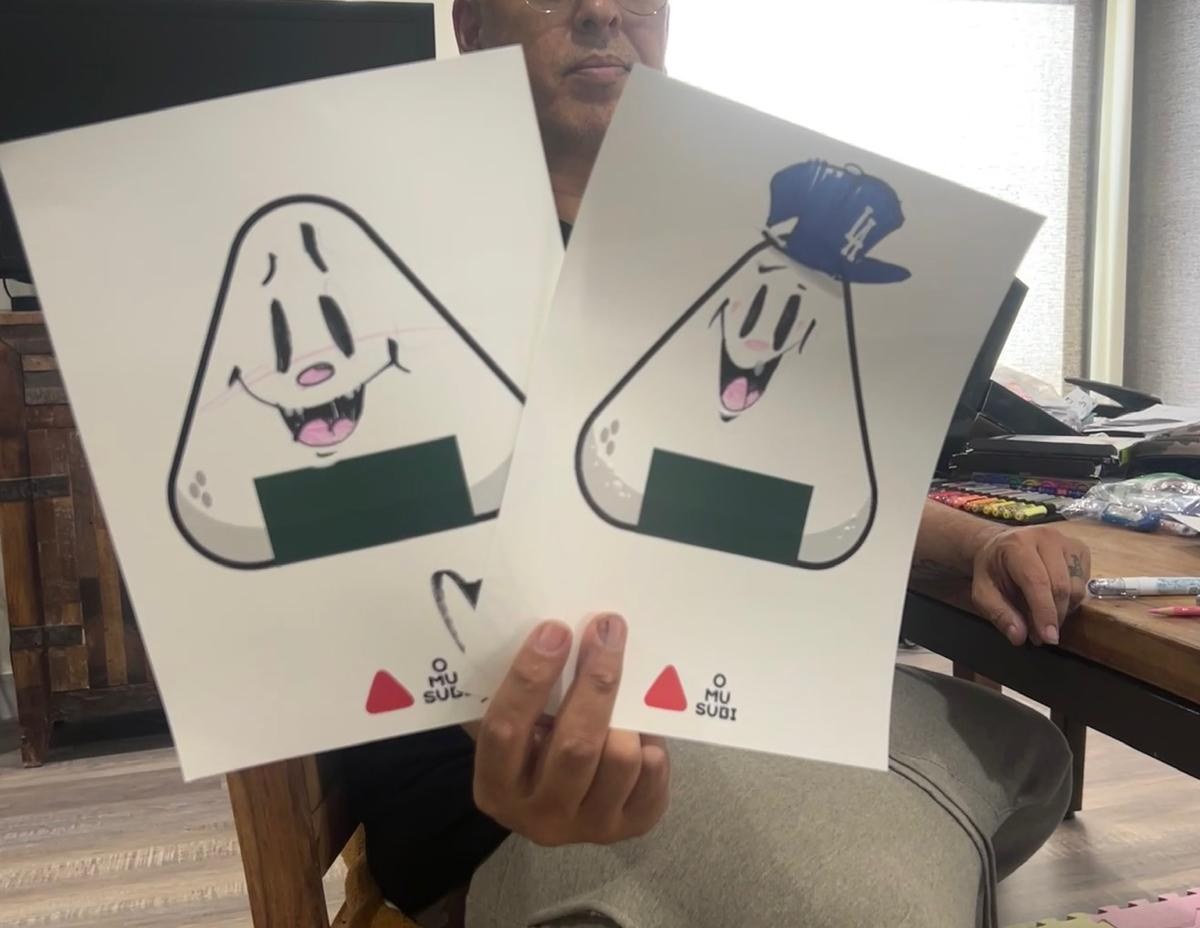
A granny, a mustache guy, a Dodger‑capped kid, a demon‑eyed troublemaker, a stoned‑hearts romantic — each one a portrait sitting inside the brand mark.
Slick is developing a small repeatable ensemble of characters that all live within the official Omusubi silhouette. These become the focal art on the gallery wall, the heat-transfer library for the merch-customization station, and the visual world that guests step into when they walk in the door.
The cast is range-tested by design: kid-friendly faces alongside edgier ones, so every guest finds a character that fits.
Every face starts from the Omusubi mark — never on top of it.
Concept Stage · Final Art Forthcoming from Slick's Studio
Slick is exploring additional concepts that bring more of his own iconic vocabulary into the activation — work that lets the room reference both worlds at once. The headline concept on the table:
Slick's trademarked LA Hands — his signature cartoon hand vocabulary, already a permanent fixture of LA visual culture — re‑imagined to form the triangle hand sign the Omusubi team itself does in team photos. Two iconic gestures becoming one piece of art. A direct visual nod from the artist to the employees who are building the brand here.
More concepts will roll in along the way to round out the heat‑press transfer library and sticker drops — Slick generates as he works, and we'll fold in whatever lands cleanly. First look at the Tuesday Gardena meet.
The space next door is the activation surface — open square footage we can program intentionally so guests flow from food, to story, to art, to take-home merch, to bar.
Focal wall featuring the house cast at scale — large-format prints of the character sheets, framed or mounted gallery-style. The first thing you see when you walk in.
Omusubi's heritage: the Hyakunousha story, rice provenance, sustainability ethos, the Kashiwa Sato design system. The brand told in the brand's own voice.
Slick's seat — a working surface stocked with templates, markers, and the signed-on-the-spot finishing kit. Guest queue managed with a simple ticket system.
Blank tote bags and t-shirts on one side, the heat-transfer character library on the other, a heat-press station between. Guests build their piece, walk out wearing it.
Lower tables for kids, the same templates Slick uses, art supplies for color-and-customize. Slick floats through, sits with kids, sketches alongside.
Matcha cocktail bar and DJ booth produced by the event team. Sits at the back of the gallery so the room has a long center-of-gravity to walk through.

Every activation reinforces the same character world. Guests encounter Slick's house cast on the wall, get drawn into it personally, take a piece home that they made themselves, and learn the story behind the brand they're now wearing.
The hero moment. Guests sit with Slick at the live-draw station; he sketches them as an Omusubi-mark character in his style, signs the sheet, and they take it home. The reframe of the traditional artist signing — instead of waiting in a line for a name on a poster, guests become the brand mascot in real time.
Throughput-managed with a ticket system. Originals are kept on physical paper stock that scans and shares well — every guest has a social moment built in.
The same printed Omusubi-mark templates, but at lower tables stocked with markers, colored pencils, and stickers. Kids draw their own faces inside the brand silhouette. Slick floats through and draws alongside — sitting with kids, sketching collaborative pieces.
This is what makes the activation family-friendly without diluting Slick's role. He's not behind a velvet rope; he's at the table.
Pre-stocked blank totes and t-shirts. A growing library of heat-transfers featuring Slick's house cast — plus the additional concepts as they land (LA Hands × the Omusubi Triangle, and more). A heat-press station with an operator. Guests pick a blank, pick their pieces, build their version, walk out wearing it.
This is where Slick's full library does its second job — the same artwork that anchors the gallery wall becomes the wearable inventory, with stickers as a smaller take-home for the kids.
Omusubi's voice in their own words: the Hyakunousha origin, the rice sourcing standards, the Kashiwa Sato design lineage, the sustainability commitments. Vinyl-applied wall typography and a few framed editorial images. Calm, confident, restrained — counterweight to the artist energy on the opposite wall.
Lets the brand tell its own story directly to the guest, without Slick having to interpret it.
The activations stay the same. The pacing, audience, and emphasis shift between Thursday's invite-only preview and Saturday's public grand opening.
A tight pot has to cover assets, print, and activation. We've grouped every line item by priority so the brand can dial in the package without losing the core experience.
Lean schedule. Three brand-approval gates between here and ribbon-cutting — character lock, asset lock, install lock — keep us moving and keep the brand in the loop.
Slick + Omusubi + Curative at Slick's studio. Walk-through of the gallery space. Direction lock for the character cast.
Slick finalizes the house cast. Curative shepherds brand approval. Heat-transfer artwork prepared from approved characters.
Print run on templates. Heat-transfers cut. Vinyl applied. Wall prints produced. Tote & t-shirt inventory inbound.
Gallery space dressed. Slick wall hung. Brand wall installed. Stations built. Final walkthrough with all parties.
Press, influencers, community. Slick on-site. Curative running ops.
Restock templates, transfers, supplies. Touch-ups. Quiet day.
Ribbon cutting. Doors open. Family + public.
What we're building over Memorial Weekend isn't a single event. It's a repeatable character system — Slick's house cast, brand-approved and brand-safe — that can travel.
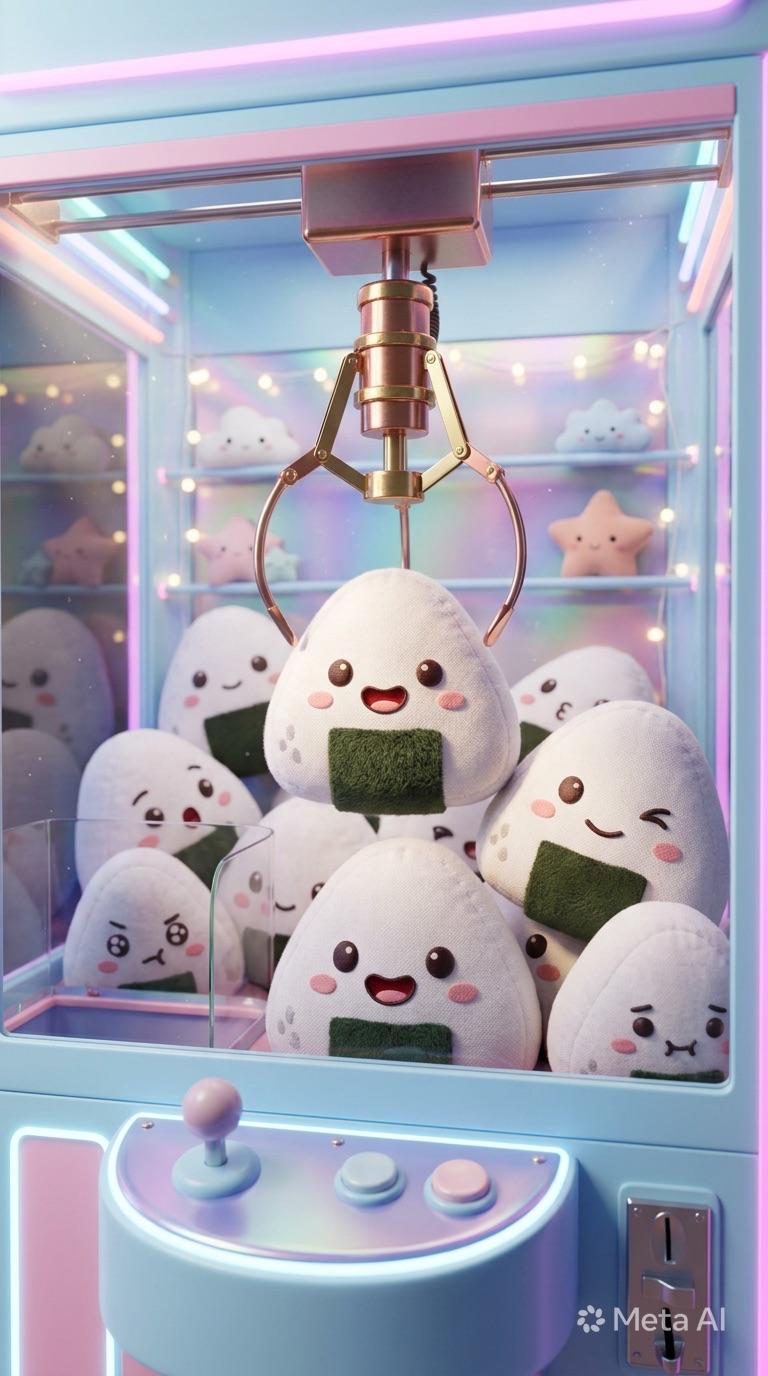
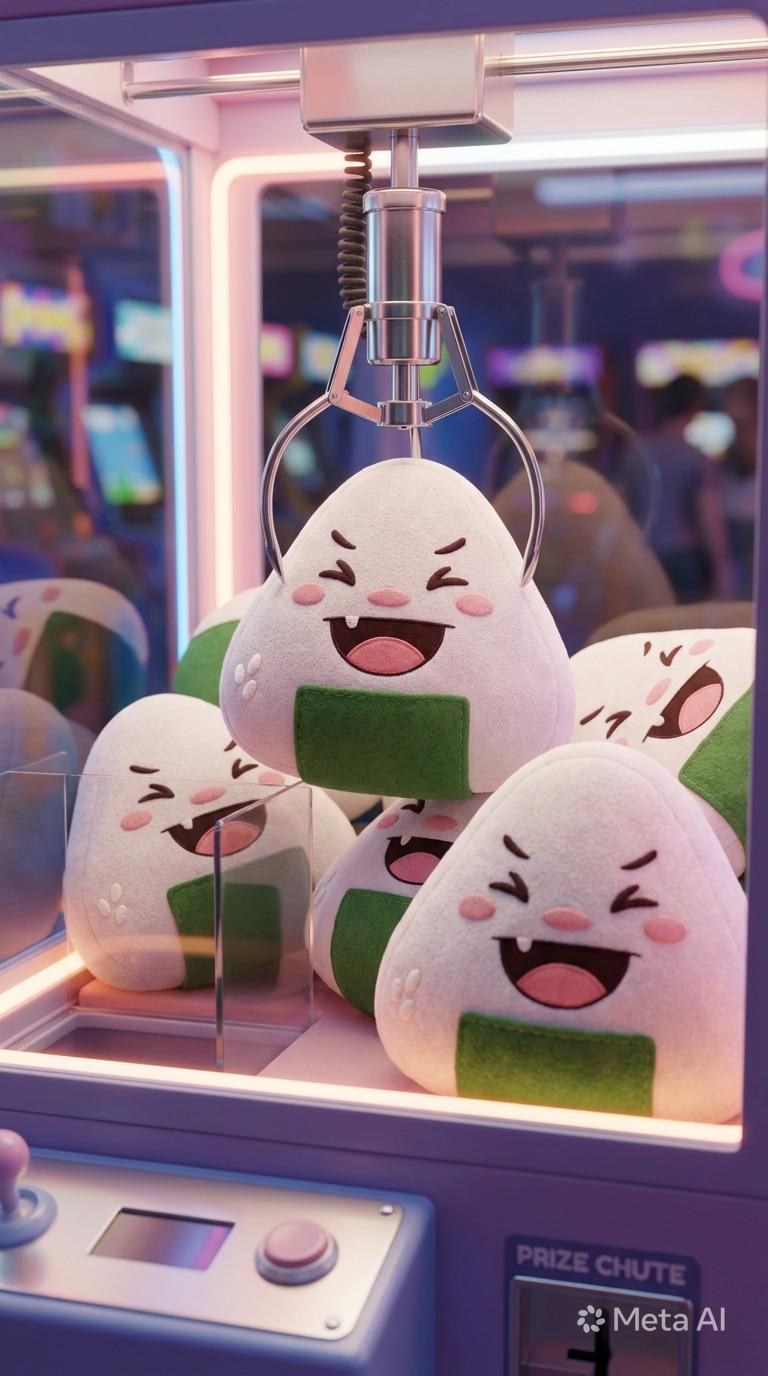
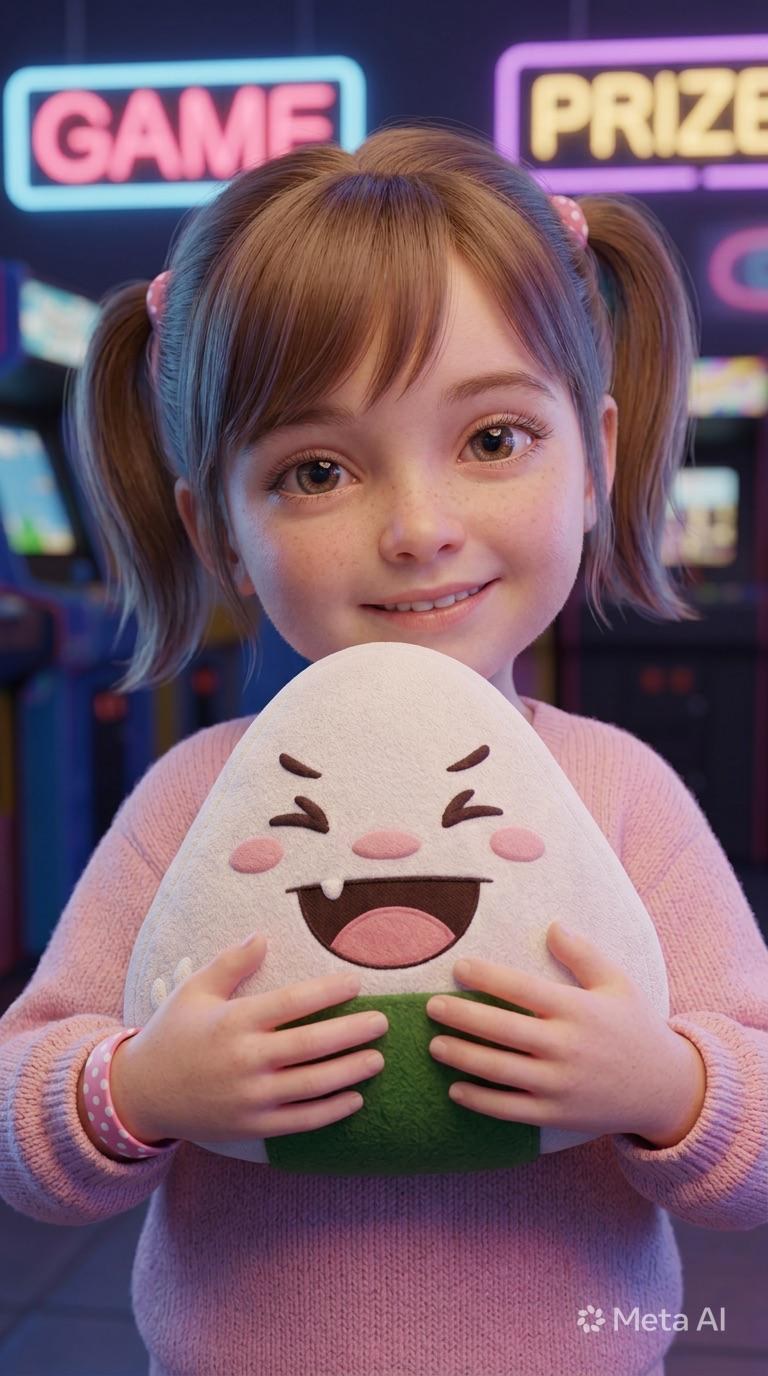
Future US store openings. Sticker drops. Limited-run merch. Seasonal character additions. A claw-machine plush concept that's already on the table. Each one extends what we land in May without rebuilding from scratch.
Concept renders · Illustrative only — final IP roadmap to be developed post-launch
Clear lanes from now until ribbon-cutting. Each party owns what they're best at; Curative is the connective tissue.
A short orientation for the Omusubi team — and shareable with anyone joining the conversation later.
A public artist since the mid‑1980s, OG Slick first gained notoriety for his contributions to aerosol painting techniques in LA's underground scene. Of Asian, European, and Puerto Rican descent, he was drawn to street art because it "saw no color."
Formally trained at Otis Parsons / Art Center College of Design, his clean graphic style now drives sculptural and large-scale work from Los Angeles to Shanghai. He owns the trademarked LA Hands — a permanent fixture of Los Angeles visual culture — and the copyrighted Love Gloves.
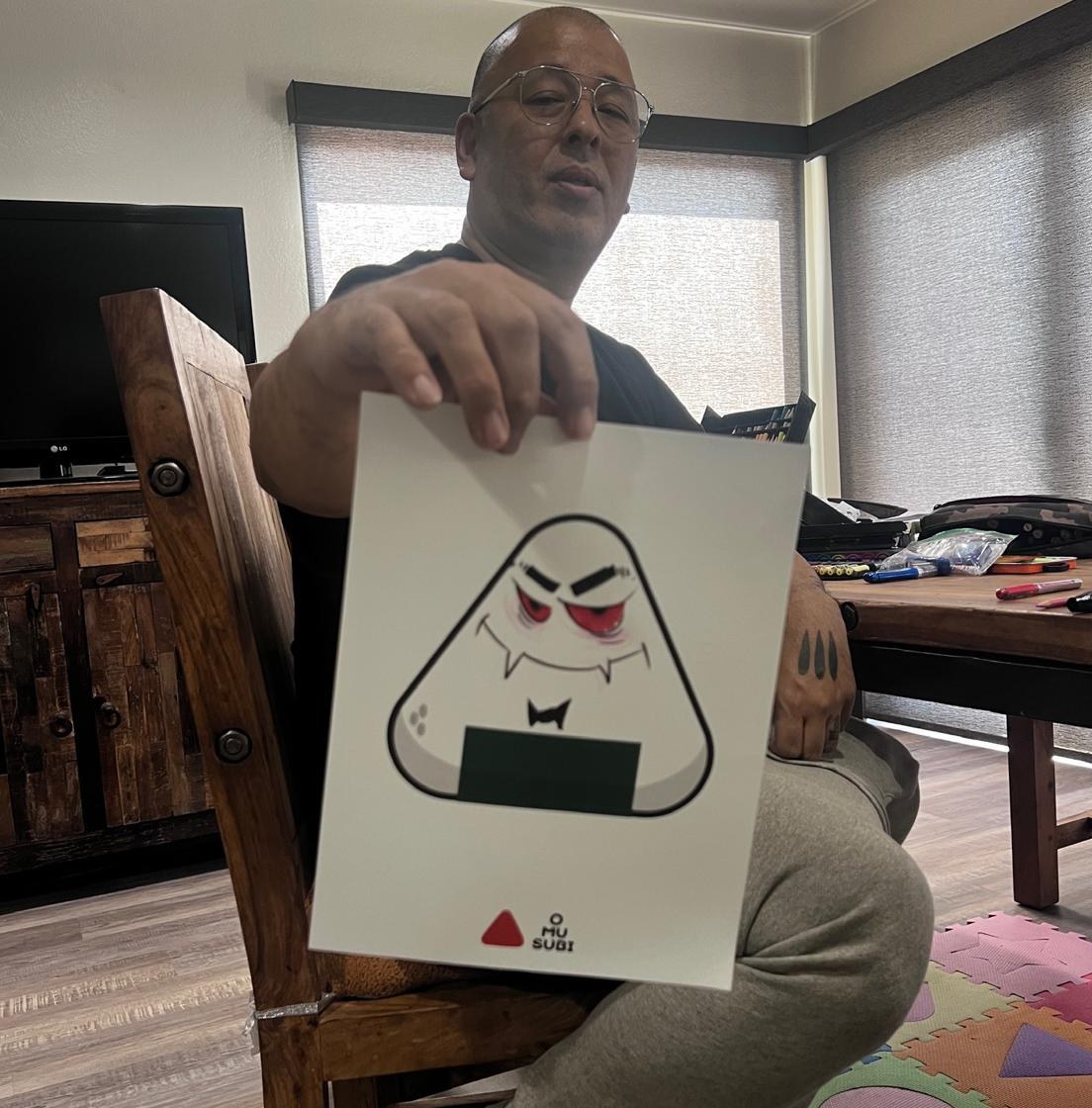
Recent character work — developed for the Omusubi opening. Broader portfolio at ogslick.com.